
R J Trees and Hedging Ltd Registered office The School, The Green, Biddestone, SN14 7DG, United Kingdom, Registered in GB
Company Registration Number 13563017 VAT no. 392152401
Skip to product information

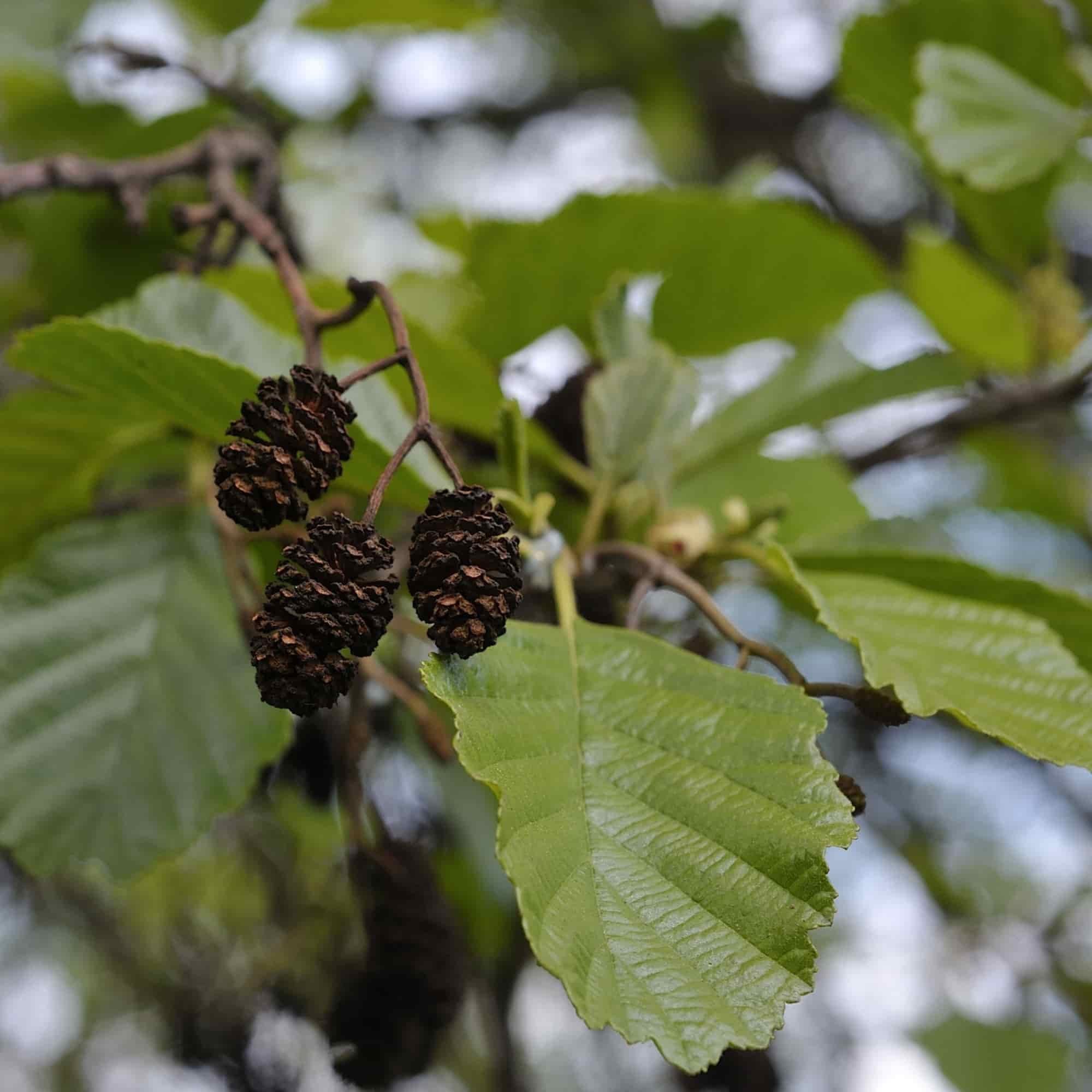


Alder - Common (Alnus glutinosa)
From
£0.89
10% off Orders over £1000+VAT
15% off Orders over £2000+VAT
Minimum order value (all plants) is £300+VAT
Free Delivery over £300+VAT excl Highlands and Islands
Please order plants in multiples of 25
Key Features
Common alder trees (Alnus glutinosa) are
- Suitable as a woodland tree, urban tree, hedge plant, hedgerow tree, woodland shrub or windbreak
- Native
- Good in wet areas
- Deciduous but it is early to leaf and late to lose its leaves so has extended leaf cover for much of the year
- Safe to plant near livestock (non-toxic)
Grown by us in Herefordshire. Buy with confidence - read our customer reviews.
The specifications shown below are our normal range but we often have additional options. If there is something that you are looking for, it's often worth contacting us.
Please contact us if you would prefer to order on the phone or have any questions or to discuss a discount for larger quantities.
Full Product Description
Our range of Alder (Alnus glutinosa) bare root trees
Alder grows well from seed into a bare root tree in just one growing season. The seedlings we offer (sometimes called whips) are grown from seed sown in open fields in spring and become a viable tree sapling by the following November and we sell them from November through until April. We have bare root Alder whips in several heights.
The seed from which our Alnus glutinosa tree saplings are grown is usually UK provenance but we sometimes also have some of the highest quality imported seed so if it is particularly important to you to have UK seed provenance, please give us a call.
Alder (Alnus glutinosa) Summary
Often chosen because it is so well suited to wetter soils and riverbanks Common Alder also does well on normal soils. There are many other attributes to this lovely tree/hedging plant. It has a tidy conical habit, is very fast growing initially, is native, has female catkins in March, comes into leaf early and then holds its leaves well into winter, and in autumn has attractive little cones.
It is a favoured species of tree for windbreaks around orchards, second only to Alnus cordata – please see our blog on orchard windbreaks.
Please be aware that Alder varieties are deep rooted so don’t plant near a building, road or paved area which could suffer damage from the roots.
Soil and Situation
An ideal tree or hedging plant for boggy ground and will even tolerate its roots being underwater for weeks on end so very much the tree to choose for flood risk areas where it helps to prevent soil erosion. It doesn’t rot in standing water but actually the wood just gets stronger. As well as it’s suitability to wet soils, it is highly tolerant of air pollution so is ideal for roadsides and urban planting schemes and it does not require a wet soil to thrive – it will be absolutely fine on normal soil. It has nitrogen fixing capability so it will not only thrive on poor soils but will enhance the soil and is an ideal tree for ground reclamation. Common alder is good in full sun or partial shade.
Whilst there are many varieties of Alder, Alnus glutinosa is the only variety native to the UK.
Leaves, flowers and fruit
One particularly good attribute of Common Alder is that it comes into leaf early and it holds onto its leaves late so although it is deciduous, it is without its leaves for a relatively short time.
It has early male catkins (a good source of early nectar and pollen for bees and a wide range of insects) and small female cones in autumn (strobiles) which hang on the tree like Christmas baubles, opening to disperse seed on wind and water. The seeds are eaten by birds.
The leaves are quite large, dark green, shiny, shaped like a tennis racquet and indented at the end (so there is no pointed tip). They emerge from greyish/purplish buds.
Alder produces tough and durable light wood which is rot resistant and was frequently used for boat building.
Eventual height and growth rate
Alders can be trimmed as a hedge, allowed to grow as a tall windbreak, or as a tree it will grow to about 20m with a conical shape. It is fast growing when young (up to 2m pa) in the right situation. Alder trees live for about 60 years, longer if coppiced.
Also known as Black Alder or European Alder. Betulaceae family.
Delivery Information
Free Delivery
For deliveries of orders over £300 + VAT, (which is our minimum order value) we have free delivery to all mainland areas nationwide. If you are in the Scottish Highlands or any of the Islands, please email us or call us and we will quote you a delivery charge which we will subsidise.
All orders are despatched on pallets and will be delivered to the kerbside. We will email you to tell you when your order has been despatched and that email will contain a link so that you can track your delivery.
You can request a specific delivery date when you place your order and we will do our very best to accommodate that date but cannot be held responsible if we do not meet it.
Collections from Ross-on-Wye
You can collect your plants by arrangement with our office team. Please ring us on 01989 552028 to agree a collection date. The postcode for collections is HR9 7TF.
As a trade nursery, we normally despatch stock unbagged (packed horizontally on pallets) but we can offer two bagging options.
Bagging Options
We have two options for despatching plants in bags (you do not need to have them bagged but it is advisable if there is any delay in planting and where you have large quantities, delay in planting some is inevitable).
- Very heavy duty black bags - normally used by farmers, landowners, landscapers etc
- Co-extruded bags which are white on the outside, to reflect sunlight, and black inside, to retain moisture on the roots - normally used by foresters.
In both cases, there is a considerable labour cost to us in putting stock into bags, and then the air in the bags takes up a considerable amount of space on the pallet which means that we get many fewer plants onto a pallet compared with unbagged stock eg for 1+0 seedlings instead of approx. 10,000 plants per pallet of unbagged stock, we'd only get approx. 5,000 plants per pallet if they are bagged. There's also a significant labour cost in putting plants into bags compared with loose packing on a pallet (which is the normal method for nursery to nursery sales). Given that we pay the delivery cost on most orders, supplying stock in bags is a significant extra cost for us for some customers and hence we make a modest charge.
You can specifically request black or white bags on the website after you add plants to your shopping basket. Here is a link to the page Bagging Service for bare root plants for farms and forestry – rjtreesandhedging. Please order the same quantity as the number of plants you are buying - the pricing for bagging is per plant rather than per bag.